HDMI ARC vs eARC for TV Audio
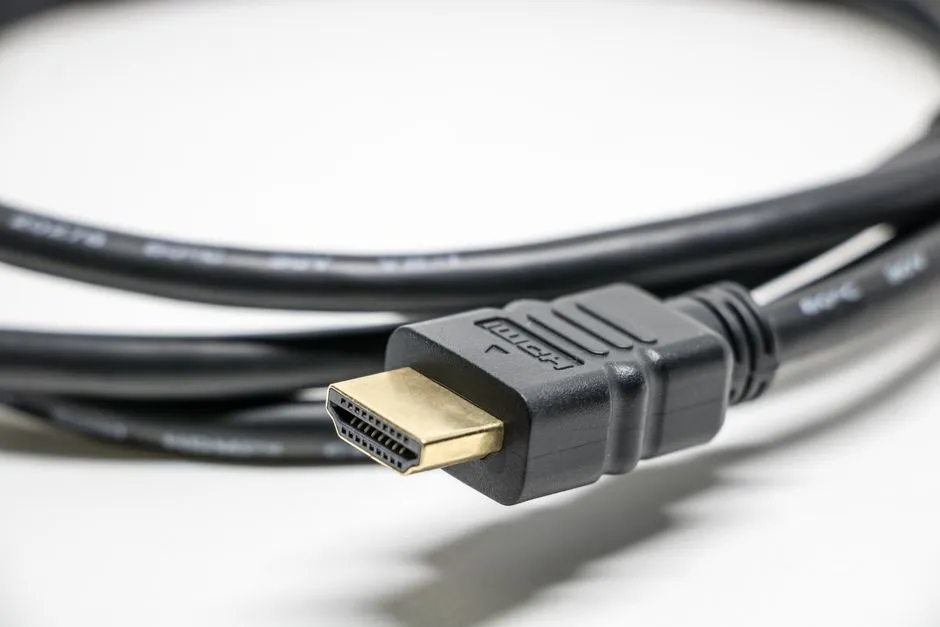
- ARC and eARC send TV audio back over HDMI
- ARC vs eARC at a glance
- The format is the reason to choose eARC
- Trace the source path before changing equipment
- Do an endpoint–source–format audit
- Connect the labeled ports and preserve access
- Cable choice without shopping by superstition
- Compatibility is implementation-specific
- Troubleshoot silence in a fixed order
- When eARC is worth prioritizing
- Sources
ARC and eARC send TV audio back over HDMI
HDMI ARC (Audio Return Channel) sends sound from a television to a soundbar or AV receiver through the same HDMI connection that can carry video toward the TV. eARC (Enhanced Audio Return Channel) expands that return path for high-bitrate and uncompressed multichannel formats, better device discovery, and audio optimization. Choose eARC when your actual source and sound system need those formats; ARC remains sufficient when every program you use reaches the audio system in a format both devices already support.
The labels describe a return path, not sound quality by themselves. A soundtrack must survive four gates: the source format, the TV's handling of that format, the return connection, and the soundbar or receiver's decoder.
ARC vs eARC at a glance
| Question | ARC | eARC |
|---|---|---|
| What does it do? | Returns TV audio through HDMI | Returns TV audio through a broader-capability HDMI path |
| Where did it appear? | Listed by HDMI Licensing Administrator among the features of HDMI 1.4b | Included in the current HDMI 2.2 specification as an enhancement to ARC |
| What audio should you assume? | Only formats explicitly supported across the exact TV, audio device, source, and app | HDMI lists high-bitrate formats up to 192 kHz/24-bit, uncompressed 5.1 and 7.1, 32-channel uncompressed audio, DTS-HD Master Audio, DTS:X, Dolby TrueHD, and Dolby Atmos |
| Do both endpoints need it? | Both TV and audio device need a compatible ARC implementation | Both need eARC for eARC capability |
| Is eARC automatically ARC-compatible? | Not applicable | No. HDMI says eARC is not defined as backward-compatible with ARC, though manufacturers may implement both |
| Which cable? | Sony specifies a High Speed HDMI cable for ARC | HDMI says Ultra High Speed and Ultra96 HDMI cables are designed for eARC; Ethernet-channel cable types may work but are not all certified for eARC |
| Are control settings required? | Often; use the two manuals | Model-dependent; some TVs still require HDMI-CEC plus an eARC mode |
The HDMI 1.4b overview defines ARC's central job: an HDMI-connected TV can send audio upstream to an AV receiver or soundbar without a separate audio cable. The current HDMI eARC page names the broader formats and discovery functions. Those specification-level capabilities are ceilings, not promises about every port on every product.
The format is the reason to choose eARC
If a TV app, set-top box, disc player, or console outputs a format that ARC and both endpoints already support, changing the return path to eARC does not create a higher-resolution master. eARC matters when the TV must return something outside the shared ARC path—most clearly uncompressed 5.1/7.1 audio or high-bitrate formats such as Dolby TrueHD or DTS-HD Master Audio.
Sony's current product-support explanation reports eARC transfer speed of up to 37 Mbs and lists uncompressed 5.1/7.1, Dolby Atmos, DTS:X, DTS-HD Master Audio, and Dolby TrueHD among the formats that can use the broader path. HDMI's own page goes further at specification level, listing audio up to 192 kHz, 24-bit, including 32-channel uncompressed audio. Your TV may still decode, convert, or refuse a format before it reaches that path, so its audio-output table remains decisive.
Dolby documents Atmos delivery inside Dolby TrueHD, Dolby Digital Plus, and Dolby MAT, so “Dolby Atmos” alone does not settle the ARC-versus-eARC question. Inspect what the source sends and what the receiver reports. If the system displays Dolby Digital Plus from a streaming app and everything works, eARC need not improve that program merely because the eARC logo is newer. If a lossless disc soundtrack reaches the TV as Dolby TrueHD and you want that exact path returned, eARC support across the chain becomes relevant.
Trace the source path before changing equipment
There are three common routes.
A built-in TV app
Audio from a built-in app or the television's antenna tuner begins inside the television and returns directly through ARC or eARC:
TV app → TV audio processing/output setting → ARC/eARC port → soundbar or receiver
This is the cleanest diagnostic source because it removes an external player's HDMI input from the chain.
A player connected to the TV
The television receives both picture and sound, then returns the sound:
Player or console → TV HDMI input → TV pass-through/processing → ARC/eARC → soundbar or receiver
This route can preserve a video feature that an older receiver cannot pass. It also makes the TV's supported-input and pass-through formats a possible bottleneck, with model-specific switching and lip-sync behavior. The word “eARC” on the output port does not guarantee that every other HDMI input can accept and forward every audio format.
A player connected to the receiver
The receiver handles audio first and sends video onward:
Player → receiver → TV
This can avoid the TV return path for that source. It works only if the receiver supports the required video resolution, refresh rate, HDR mode, and other signal features. Our HDMI-port guide helps map those input jobs before a cable is moved.
Write the actual route down. It is much easier to locate one failed handoff on paper than to reason from a cabinet full of identical black cables.
Do an endpoint–source–format audit
Before buying anything, fill in these four lines from official manuals or on-screen information:
| Gate | What to record |
|---|---|
| TV return port | Exact label: ARC, eARC/ARC, or neither |
| Audio-system TV port | Exact label and whether its manual enables ARC, eARC, or both |
| Source output | PCM, bitstream, auto, or a named codec; note the chosen setting |
| TV digital-audio output | PCM, auto, pass-through, or the model's equivalent |
Then run two controlled tests:
- Play a built-in TV app and confirm ordinary stereo sound.
- Play one external source through the TV and confirm ordinary stereo sound.
- Select a known multichannel program and read the format reported by the receiver or soundbar.
- Change only the TV digital-audio output between its documented PCM, auto, or pass-through choices; record the result.
- If eARC is the goal, use a known file or disc with a format that requires that broader path and verify the format at the audio device. Sony specifically suggests Dolby TrueHD or DTS-HD Master Audio for this check on its applicable models.
This separates “the speakers work” from “the requested codec reached the decoder.” Hearing surround effects is not proof that a particular lossless format survived unchanged; the audio device's status display or app is the better evidence.
Connect the labeled ports and preserve access
Connect the TV's HDMI IN (ARC or eARC/ARC) port to the audio device's HDMI OUT (ARC or eARC) or designated TV port. These are specialized ports; a different HDMI socket can pass ordinary video while providing no return audio. Use the room-measuring checklist to preserve cable bend space when the ports face a wall.
Turn equipment off and disconnect power where the product manuals require it before changing connections. Do not force a plug, sharply kink the cable, or leave cable weight hanging from the socket. If the television is wall-mounted and the port cannot be reached without moving the set, route the work to the mount instructions or a qualified installer.
After connection:
- Select the TV's external-audio or audio-system output.
- Select the audio device's TV input.
- Enable ARC/eARC or set it to Auto as the manuals direct.
- Enable the required HDMI control setting. Brand names vary: Samsung, for example, calls HDMI-CEC Anynet+ and instructs users of its applicable TVs to enable that before setting HDMI eARC Mode to Auto.
- Choose the documented digital-audio output mode.
- Test before reinstalling covers or pushing furniture back.
Cable choice without shopping by superstition
For ARC, Sony calls for a High Speed HDMI Cable. For eARC, HDMI Licensing Administrator says Ultra High Speed HDMI and Ultra96 HDMI cables are designed to support eARC. Its current FAQ adds that eARC might operate over Standard or High Speed HDMI cables with Ethernet, but those types are not certified for eARC operation.
That does not mean every eARC problem requires the newest maximum-bandwidth cable. The same cable may also carry video toward the TV, so choose an official cable category that covers the most demanding video signal on that link. HDMI's cable overview identifies official cable names and certification labels; “8K-ready,” “cinema grade,” and price alone are not cable categories.
If a previously working system becomes intermittent, reseat both ends before buying. Then test a short, known-working certified cable directly between the two labeled ports, with switches, adapters, wall plates, and extenders removed. That single substitution tells you more than replacing three devices at once.
Compatibility is implementation-specific
An eARC television connected to an ARC-only soundbar does not upgrade the soundbar. More importantly, fallback is not guaranteed merely by the names. The HDMI 2.2 FAQ says manufacturers may make products compatible with both eARC and ARC, but eARC is not defined to be backward-compatible with ARC.
Some actual pairs do fall back. Sony's applicable-product guidance says an eARC TV connected to an ARC-only soundbar is limited to ARC-format capability. Treat that as a documented behavior of supported products, not a universal promise. Confirm both manuals and firmware notes before planning around a mixed ARC/eARC pair.
The same caution applies to HDMI-CEC. One remote may control power and volume when device control is enabled, but that convenience function can also be the setting an ARC implementation expects. Menu names and dependencies vary. Follow the model instructions instead of copying an unrelated television's click path.
Troubleshoot silence in a fixed order
Change one layer at a time:
- Ports: confirm the cable joins the two sockets labeled ARC or eARC/ARC.
- Inputs and outputs: select the TV's audio-system output and the receiver or soundbar's TV input.
- Return-channel mode: enable ARC/eARC or Auto on both products if offered.
- HDMI control: enable the CEC setting required by the manuals.
- Basic format: test PCM stereo. If that works, the physical return path is active.
- Requested format: test Auto or Pass-through and watch the audio device's format display.
- Cable: reseat, then substitute a short known-working cable of the documented category.
- Topology: remove switches, adapters, extenders, and other HDMI devices temporarily.
- Reset sequence: follow both manufacturers' power-reset and reconnection order.
- Firmware: compare installed versions with official support pages for the exact models.
Sony's troubleshooting flow follows the same broad progression: verify labeled ports, power-reset, enable Control for HDMI, check ARC/eARC and TV-audio settings, remove adapters or extenders, isolate other devices, and test PCM when a higher format produces silence. Do not randomize picture settings; they do not repair an audio return handshake. Our first-picture-settings guide can wait until the signal path is stable.
When eARC is worth prioritizing
Prioritize eARC when all three statements are true:
- a source connected to or built into the TV outputs a high-bitrate or uncompressed multichannel format you intend to preserve;
- the TV can accept and pass that format through eARC; and
- the receiver or soundbar can decode it.
ARC is a reasonable endpoint when the current apps and sources already return their supported formats reliably, the audio system has no eARC input, or the external players connect directly to a receiver that handles their audio before video reaches the television.
The useful comparison is not ARC versus eARC as two badges. It is the format you have, the path it takes, and the decoder at the end. Verify those three, and the cable topology becomes a diagram instead of a ritual.
Sources
- HDMI Licensing Administrator: Enhanced Audio Return Channel
- HDMI Licensing Administrator: HDMI 2.2 overview and eARC FAQ
- HDMI Licensing Administrator: HDMI 1.4b and ARC
- HDMI Licensing Administrator: official cable types
- Sony Support: eARC capability and format verification
- Sony Support: ARC/eARC troubleshooting
- Samsung Support: enabling eARC on applicable TVs
- Dolby: Dolby Atmos carriers and source paths